

HERITAGE RESTORATION & STONE CLEANING
CADW (Welsh Heritage) - Blaenavon Iron Works, Blaenavon, NP4
Client's Challenge
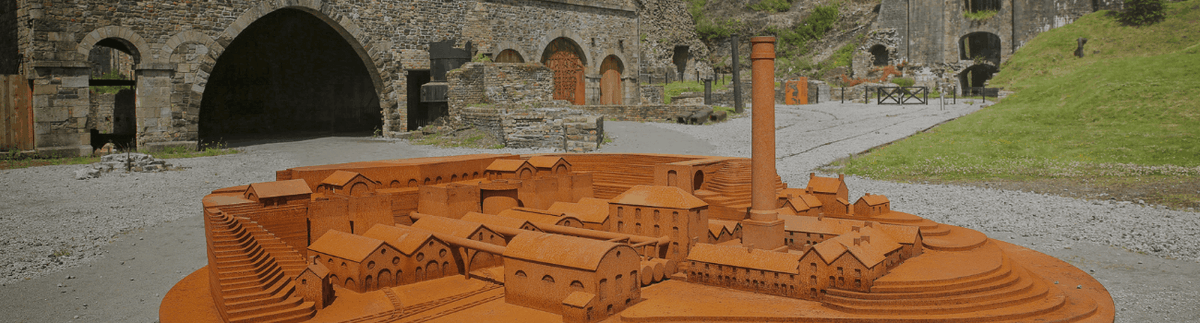
CADW contacted APT ICC to carry out specialist heritage restoration and stone cleaning works across multiple areas of Blaenavon Iron Works.
Decades of environmental exposure, historic industrial use, previous film set adaptations, and graffiti had left stone and structural surfaces affected by paint coatings, atmospheric soiling, limescale deposits, and surface efflorescence. As a protected heritage asset, the site required a conservation-led solution that would restore surfaces without compromising original materials or finishes.
Assessment & Planning
APT ICC met with the client on site to review the areas of concern and assess surface condition, substrate strength, and levels of contamination.
Following this, further discussions were held to agree the most appropriate cleaning or restoration method and the projected results, taking into account the existing condition of the surfaces to be treated. Where necessary, sample test areas were completed to demonstrate the level of finish that could be achieved and to confirm the agreed approach prior to full works commencing.


Methodology
APT ICC delivered the works using a carefully controlled, conservation-led dry soda blasting methodology.
Soda was selected as the blasting medium due to its non-abrasive properties, allowing effective removal of paint coatings, atmospheric soiling, and graffiti while protecting weaker historic stone. Dry soda blasting was used exclusively to prevent water saturation of historic masonry and timber elements and to avoid introducing unnecessary moisture into the structure.
The works were carried out as follows:
1. Establishment of protected work zones across the site.
2. Controlled dry soda blasting of stone and structural surfaces based on substrate strength and contamination levels.
3. Removal of paint coatings, atmospheric soiling, and graffiti using soda blasting only, with no chemical graffiti removal methods employed.
4. Treatment of stone pavers and masonry to remove limescale and surface efflorescence, improving appearance and pedestrian safety.
5. Continuous inspection throughout the works to ensure conservation standards were maintained.
This approach ensured effective restoration while safeguarding the integrity of historic stone and timber elements.

Site Access & Logistics


Equipment
• Specialist dry soda blasting systems
• Low-pressure, heritage-approved blasting equipment
Chemicals
• UltraClean MB = multi-purpose cleaner (used only where appropriate for non-blasting surface cleaning tasks)
No chemical graffiti removal products were used; graffiti removal was achieved using dry soda blasting only.
The Results
• Historic stone surfaces restored without damage
• Graffiti and paint coatings removed using dry soda blasting
• Stonework revitalised while retaining original character
• Historic timber protected from moisture exposure
• Limescale and efflorescence eliminated
• Works delivered in line with strict heritage conservation standards
The restoration significantly enhanced the appearance and long-term preservation of this nationally important heritage asset.





User Name 2 Days ago
Lorem ipsum dolor sit amet, consectetuer adipiscing elit. Aenean commodo ligula eget dolor.