
HERITAGE GRAFFITI REMOVAL & SANDSTONE RESTORATION
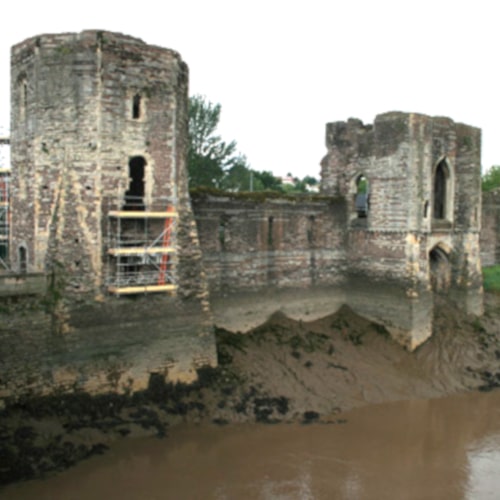
CADW (Welsh Heritage) - Newport Castle, Newport, NP20
Client's Challenge
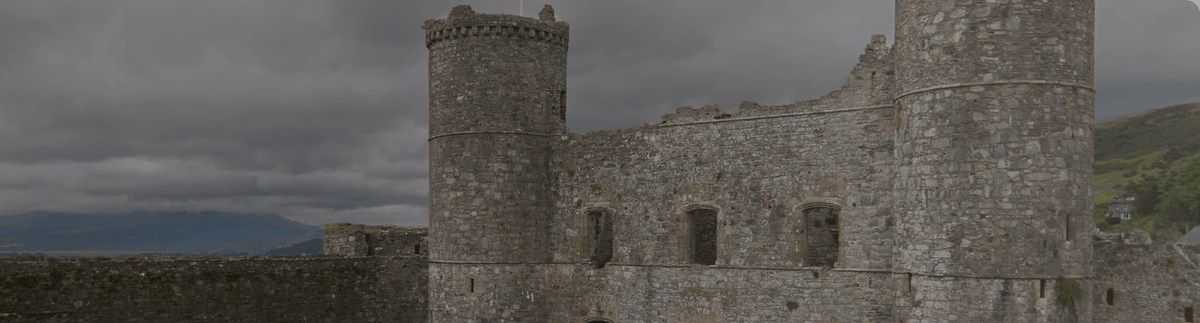
Cadw required an urgent specialist intervention following vandalism at Newport Castle, where offensive graffiti had been applied across multiple areas of the historic structure.
The graffiti affected sensitive sandstone masonry, including sections within the King’s Chamber, an area of high historical and architectural significance. The stonework was already vulnerable due to age, environmental exposure and the presence of fragile limewash coatings, some of which were actively deteriorating.
Any incorrect cleaning method posed a serious risk of:
• Irreversible sandstone damage
• Loss of historic surface detail
• Removal of original limewash finishes
• Long-term deterioration of the substrate
Cadw required a conservation compliant, non-abrasive solution capable of removing graffiti while preserving the integrity of the historic fabric.
APT ICC were selected due to their proven heritage restoration experience, specialist soda blasting capability and established working relationship with Cadw on sensitive historic sites across Wales.
Assessment & Planning
APT ICC’s heritage surveyor attended Newport Castle and met on site with Richard Turner, Senior Conservation Officer for Cadw, to assess the damage and agree an appropriate restoration methodology.
The assessment focused on:
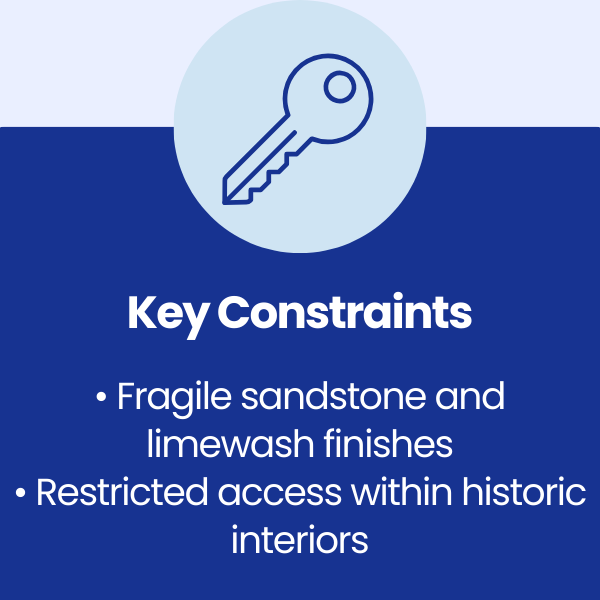
• Condition and vulnerability of the sandstone substrate
• Areas of fragile or crumbling limewash
• Locations where aggressive or wet cleaning would cause harm
• Risk of surface loss through abrasive techniques
• Environmental constraints linked to the castle’s proximity to the estuary
It was confirmed that high-pressure washing, chemical graffiti removers and abrasive blasting methods were unsuitable.
Soda blasting was approved as the preferred solution due to its controlled, non-destructive properties, allowing
precise graffiti removal while preserving historic surfaces.


Methodology
The restoration works were delivered using a conservation-led,
carefully controlled process:
1. Heritage surface review and protection
Sensitive sandstone and limewashed areas were assessed and protected prior to cleaning.
2. Controlled soda blasting for graffiti removal
Specialist soda blasting systems were used to lift graffiti from sandstone surfaces without abrasion, impact damage or moisture saturation.
3. Targeted sandstone cleaning and visual restoration
Following graffiti removal, controlled sandstone cleaning was carried out to restore surface consistency and visual integrity.
4. Environmental and equipment safeguards
Due to periodic cellar flooding, additional controls were implemented to protect equipment and maintain uninterrupted cleaning performance.
5. Final inspection and conservation sign-off
All treated areas were reviewed to confirm graffiti removal had been achieved without substrate damage or loss of historic finishes.
Site Access & Logistics
Equipment
• Specialist soda blasting systems designed for heritage substrates
• Controlled media delivery equipment
• Protective screening and environmental safeguards
Chemicals
• No chemicals used Graffiti removal was completed entirely through soda blasting in line with conservation requirements.
The Results
• Offensive graffiti fully removed from all affected areas
• Sandstone surfaces cleaned with no damage or erosion
• Fragile limewash preserved and left intact
• King’sChamber and historic façades restored visually
• Conservation-compliant methodology successfully demonstrated
Cadw were highly impressed with both the results and the level of substrate protection achieved. The success of the project supported Cadw’s approval of APT ICC’s soda blasting services for use across heritage sites throughout Wales where sensitive surface cleaning is required.




User Name 2 Days ago
Lorem ipsum dolor sit amet, consectetuer adipiscing elit. Aenean commodo ligula eget dolor.